How Agentic AI Workflows are Revolutionizing Software Engineering

Alex Nguyen
Head of AI Engineering
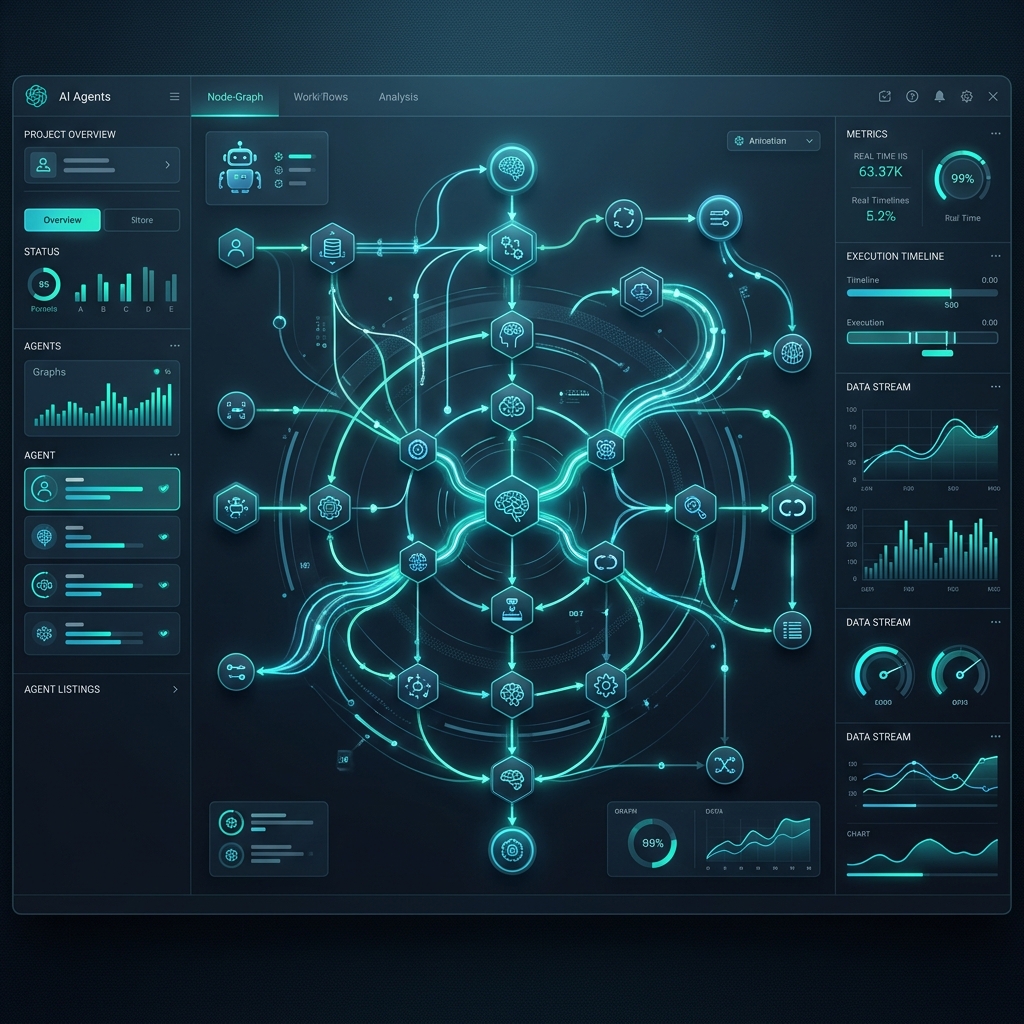
The landscape of software development is undergoing a paradigm shift. For the past few years, developers have relied on AI code completion assistants to write boilerplate code. However, the true revolution lies in Agentic AI—intelligent workflows where autonomous agents collaborate to tackle complex coding tasks from planning to deployment.
What is an Agentic AI Workflow?
Unlike a single chatbot prompt that generates code, an agentic workflow breaks down a software request into specialized sub-tasks managed by independent agents. These agents communicate, review each other's work, write tests, execute them, and refine the code based on test feedback.
Agentic AI transitions the developer's role from a manual coder to an orchestrator and reviewer, dramatically accelerating development speeds while raising code quality.
Key Components of Multi-Agent Systems
- Planner Agent: Gathers requirements, analyzes existing structures, and drafts step-by-step implementation plans.
- Coder Agent: Writes clean, documented code according to the implementation plan.
- Tester Agent: Automatically designs unit tests and runs them in a sandboxed terminal environment.
- Auditor Agent: Scans code for security vulnerabilities, performance bottlenecks, and design patterns compliance.
Example: Creating an Autonomous Agent Loop
Below is a simple representation of how an agentic script coordinates tasks programmatically, looping until tests pass successfully:
async function runCodingWorkflow(taskDescription) {
  const plan = await plannerAgent.createPlan(taskDescription);
  let code = await coderAgent.writeCode(plan);
  let tests = await testerAgent.generateTests(code);

  let attempts = 0;
  while (attempts < 3) {
    const testResult = await testRunner.execute(code, tests);
    if (testResult.passed) {
      const auditResult = await auditorAgent.scan(code);
      if (auditResult.isSecure) {
        return { code, status: "SUCCESS" };
      }
    }
    // Feed errors back to the coder for self-healing
    code = await coderAgent.fixCode(code, testResult.errors);
    attempts++;
  }
  throw new Error("Workflow failed to converge to a working solution.");
}
How RYL Technology Implements Agentic Workflows
At RYL Technology, we integrate autonomous agents into our continuous integration pipelines. Our agents review PRs, flag potential bugs before they reach humans, and even generate documentation automatically, saving up to 40% of standard engineering overhead for our clients.
Related Articles